Background
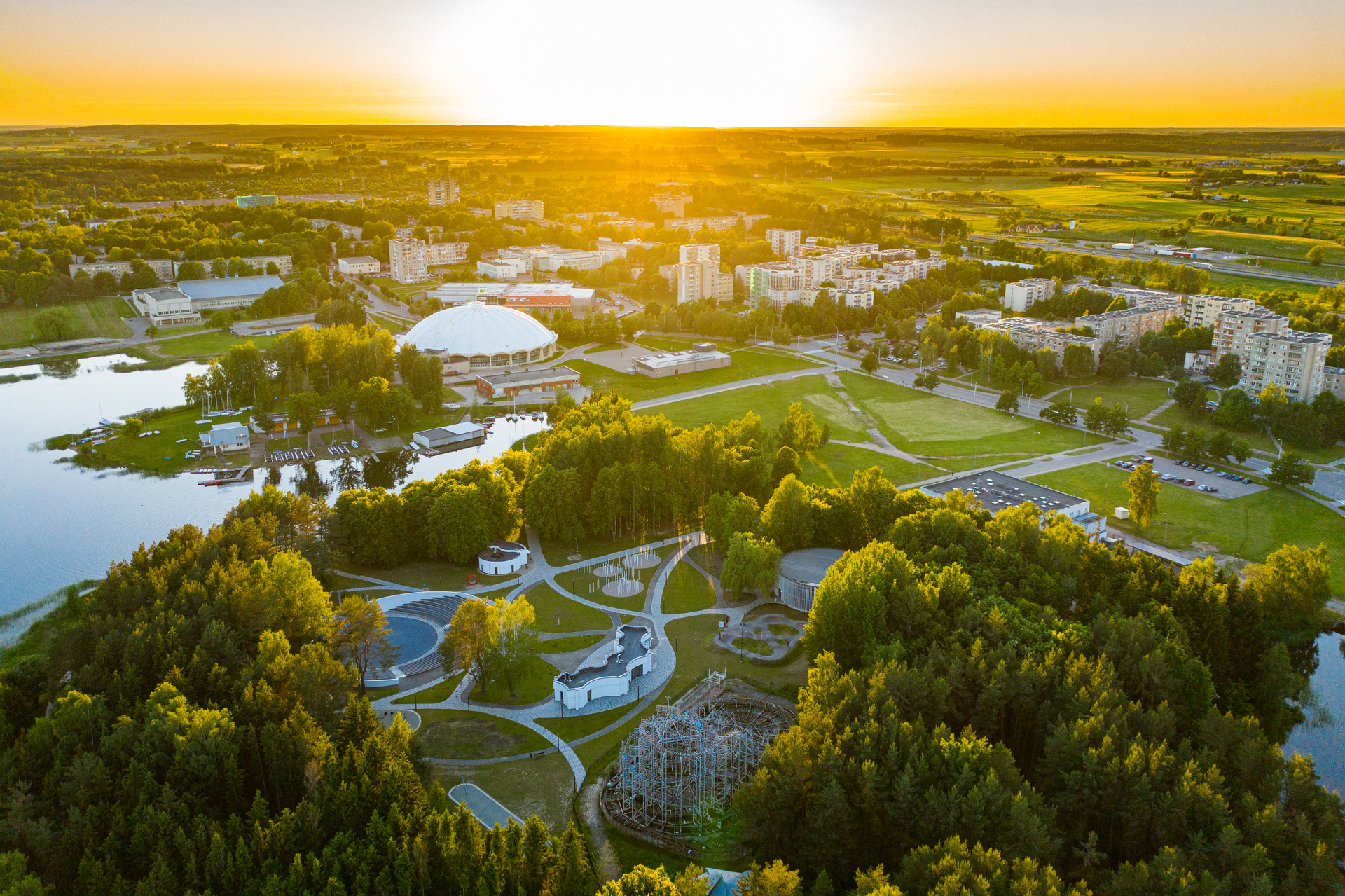
I grew up in a small town in Lithuania, part of a middle class family. I've always had food on the table, but rarely more. My parents did the best they could, and I genuinely appreciate that, but from early on I've always had a strong, persistent drive for more.
Part of growing up feeling that drive was also feeling out of place. Even as a kid I could tell my brain worked differently to the people around me — I didn't fit the standard mould, I didn't think the same way, which made me quite closed off and reluctant to share how I thought. For a long time that felt like something was wrong with me, like I was broken. In hindsight it was very much just a neurodivergent brain combined with undiagnosed ADHD and a severe lack of guidance. Somewhere around my late teens I started to understand that a lot of these differences were actually advantages — the way I recognize and understand patterns few others can, the way I systemize every process even the simplest of things. Turns out these weren't bugs, they were features.
Growing up I spent most of my childhood and teenage years online. I was always deeply curious about the internet, and combined with a raging competitive drive, video games became the perfect environment for me. I know a lot of people hear "video games" and immediately tune out — and to be fair, most of the time that instinct isn't wrong. But for me it had a lot of genuine upside.
The first game I took seriously was Old School Runescape, introduced to me by a relative who also showed me something far more valuable — how the digital economy attached to it worked. I started grinding quest completions as a service, and PvE for loot, which I then would sell for gold and gold for real world Lithuanian currency (which at the time was still Litai not Euro). I was 10–11 years old, and after grinding through the summer I managed to save up enough, with a little help from my parents, to buy my first laptop "supposedly to be used for school". That was one of those reality-shattering moments, that made me realize: Holy shit, there's a whole world of digital possibility out there.
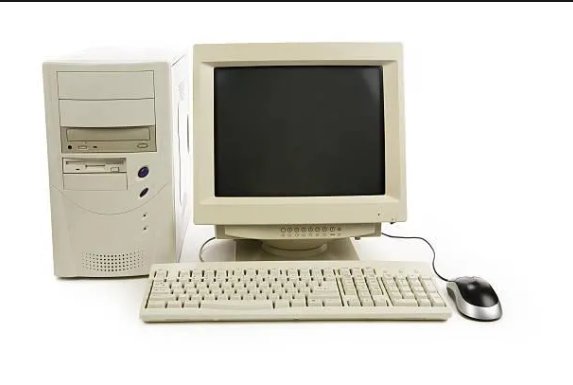
And if you want a reference point for how significant that upgrade was, the picture below is pretty much exactly what I was working with before. That machine was barely functional but it was mine.
The new laptop opened up a whole new world — no longer held back by barely functional hardware, I got introduced to League of Legends. And look, I'll be honest: this game sucks, and I genuinely don't recommend it to anyone for a variety of reasons. But starting out, even though I was absolutely terrible and began at the absolute bottom of the rankings, the competitive environment got me hooked fast. I started researching, watching guides, reviewing professional VODs, reviewing my own replays — obsessing and hyperfocusing until I was consistently climbing. Every time I hit a plateau I just doubled down until I pushed through it. That process of deliberate, obsessive improvement is probably the most valuable thing gaming ever taught me.
Eventually I've managed to climb to top 400 in EU — on a 30–60fps laptop. I even tried to go pro once, but in hindsight the odds were never really in my favor. What ended up happening was more interesting — my relationship with the game shifted completely. It stopped being something I enjoyed and improved at, and became something I felt obligated to do. Waking up and immediately thinking "Fuck, I have to play 10 games today." That mindset slowly but consistently drained me until I burned out and quit almost entirely. On the upside, since I was able to consistently hit high elo I was boosting and selling LOL accounts during that period, which was a nice little side hustle at the time.
After League I kept experimenting. Every game I took seriously I was able to replicate similar results, consistently reaching the top 1–0.1% of the leaderboard. That pattern eventually made something click: if I can improve like this in games, I can do the same in life. After all, everything is a game of some sort when you think about it.
During my teenage years I was also working every physical job I could get my hands on. There aren't many opportunities for teenagers in Lithuania and I wasn't the exception — but I took every single one I could find: construction, lake equipment rentals, grocery stores, etc. Every summer I can remember was spent working. It was great because I'd come back to school with money, but it also meant losing most of every summer. It taught me a lot about work and sacrifice early on.
Towards the end of school reality hit. Graduation was only a couple of years away, I had no direction, no plan, no idea what came next. That uncertainty wasn't just uncomfortable — it was urgent. That urgency pushed me to start looking for answers, and that search eventually led me to entrepreneurship.
Now I wish I could say those early attempts at entrepreneurship were smooth sailing — but that would be far from the truth. The reality is there's a graveyard of failed businesses that came before anything worked. Looking back it makes complete sense. I simply wasn't good at anything of value besides gaming, so those years of falling flat on my face were inevitable — there was no shortcut around them. That said, my skillset was growing exponentially in the background, and at some point I started applying the same deliberate improvement process I'd learned from games. But in terms of actual money — I've made a couple of dollars here and there, but in total I lost significantly more than I made due to various subscriptions, tools, and failed experiments.
What I did have was savings from working every summer. So right after graduating I spent everything I had on a cheap car, interviewed for a job at VDL in the Netherlands, got hired, packed everything I owned into that car — which wasn't much — and left.

The Netherlands was a new world in every sense — first time living abroad, first time working inside a system that large. The job itself was simple: eight hours of car assembly, polishing, and inspection every day. But what surrounded it wasn't. I got to see massive factory systems operating at scale, understand how SOPs function in a real environment, work inside properly managed teams, and build friendships with people from all over the world. Even though I was just a small cog in a massive machine, I genuinely enjoyed most of it. Looking back the irony is I barely saw the Netherlands as a place — every moment outside work was spent either recovering, preparing for the next shift, or trying yet again to make something online work. Another year of failure on that front, but something was shifting.
After around a year in the Netherlands, personal circumstances brought me back to Lithuania. I took some time off, and then started trying again. The results were initially the same — nothing working, everything costing money, no real progress. But I kept at it, and eventually something started to work. Marketing.
The logic that drew me to it was simple: no matter what happens in the world, people will always need to sell things, and to sell things you need attention. Marketing felt like a future-proof skill, and that thinking turned into my first genuinely profitable online business — a social media marketing agency.
Running the agency was one of the most formative periods of my life. I learned the power of networking and eventually found a mentor — someone who accelerated my growth in ways I couldn't have managed alone. I hired my first employee and very quickly found out how bad I was at managing people. Those experiences were draining, but they pushed me toward something important. I started building SOPs to reduce my dependence on individuals, then systematizing with people, and eventually replacing some manual processes with software.
Long before I was selling automation I was building systems — out of pure necessity. The move into automation as a service wasn't a pivot, it was just the natural next step of what I had already been doing for years.
Now I have a clear direction — clearer than I've ever had. The goal is simple: go as deep as possible in agentic workflow automation and get as close to that top 0.1% as I can. I know I still have a long way to go, and I'm not pretending otherwise. But that's the target, and everything I'm doing is pointed at it. More building, more shipping, more real solutions in the hands of real clients. More networking, more conventions, more time around people who are further ahead than I am. Technical depth comes from knowledge put into practice — and that's exactly what the next stage of my life is about.